
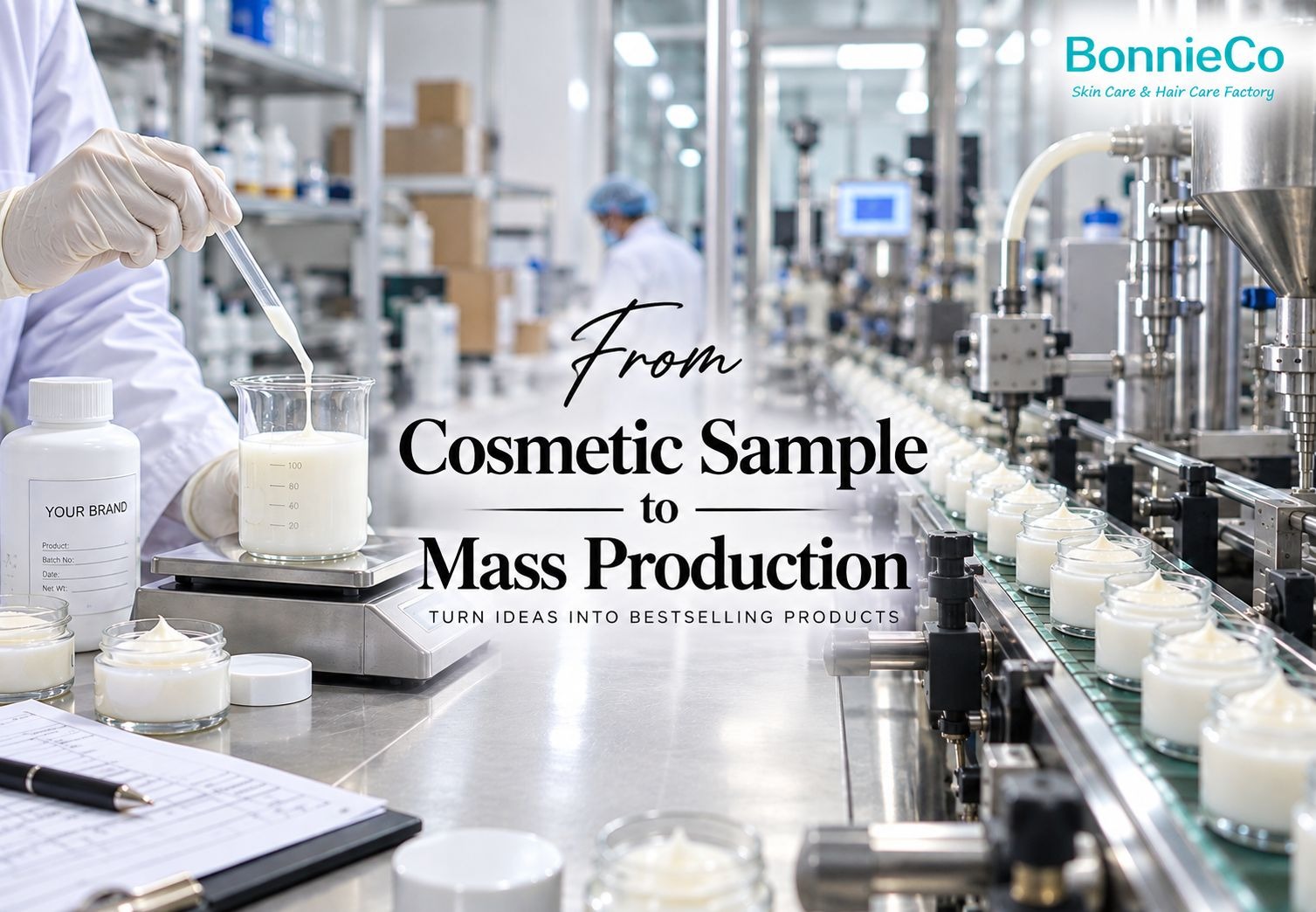
Creating a cosmetic product is not just about having a good formula. For a beauty brand, the real challenge is turning an approved sample into a consistent product that can be made in large quantities.
So, what happens between receiving your first sample and receiving your finished products?
A professional cosmetic manufacturing process includes product planning, formula development, packaging, testing, production, quality control, and shipping. For brands working with an OEM cosmetic manufacturer, understanding each stage makes it easier to plan launches, avoid delays, and keep product quality consistent.
Let’s walk through the complete journey from sample to mass production.
1. Product Requirement Analysis
Before production begins, the manufacturer needs to understand exactly what the brand wants to create. This is the starting point of the private label cosmetics process.
Defining the Product
The brand usually shares information such as product type, target market, key ingredients, desired benefits, texture, fragrance, packaging, target price, and expected order quantity.
The clearer the brief, the easier it is for the factory’s R&D team to develop a suitable product. It also helps both sides agree on expectations before sampling begins.
With the product idea clearly defined, the next step is building the formula.
2. Formula Selection / Custom Development
Brands can often choose an existing formula or request a customized formula based on their needs.
Choosing the Right Formula
An existing formula can be a practical choice for brands that want a faster development process. Custom development is more suitable when a brand wants a unique texture, ingredient combination, fragrance, or product experience.
An experienced OEM cosmetic manufacturer considers the ingredients, product performance, target market, stability, and production requirements before moving forward.
Once the formula direction is agreed on, it is time to see how the product actually feels.
3. First Sample
The first sample turns an idea into something the brand can evaluate.
What Does the Brand Check?
The brand can review the product’s texture, color, fragrance, appearance, spreadability, absorption, and overall feel.
For example, a face cream may look good but feel too heavy on the skin. A shampoo may have the right fragrance but need a different level of thickness.
The first sample provides a practical reference, but it is not always the final version.
4. Formula Adjustment
What if the first sample is close, but not quite right?
Turning Feedback Into Improvements
The brand gives clear feedback, and the R&D team adjusts the formula. Changes may involve texture, fragrance, color, viscosity, or other product features.
Several sample rounds may be needed for a customized product. Good communication is important because specific feedback helps the manufacturer understand exactly what needs to change.
Once the formula meets the agreed requirements, attention moves to the product’s packaging.
5. Packaging Selection
Packaging protects the product while also creating its first visual impression.
Finding the Right Package
Brands can select bottles, jars, tubes, pumps, boxes, and other options. They can also request customized packaging for a more distinctive brand look.
Cost, order quantity, design, and production time all need to be considered. Most importantly, the packaging should work properly with the formula.
That leads naturally to another important step: making sure the artwork is correct.
6. Artwork Confirmation
Once the packaging is selected, the brand needs to approve the artwork before large quantities are printed.
Checking Every Detail
Artwork may include the brand name, product name, ingredients, directions, warnings, barcode, manufacturer information, and other required details.
The exact requirements depend on the destination market. A careful artwork review is important because correcting a printing mistake after thousands of packages have been produced can be costly.
With the visual details approved, the product can move into testing.
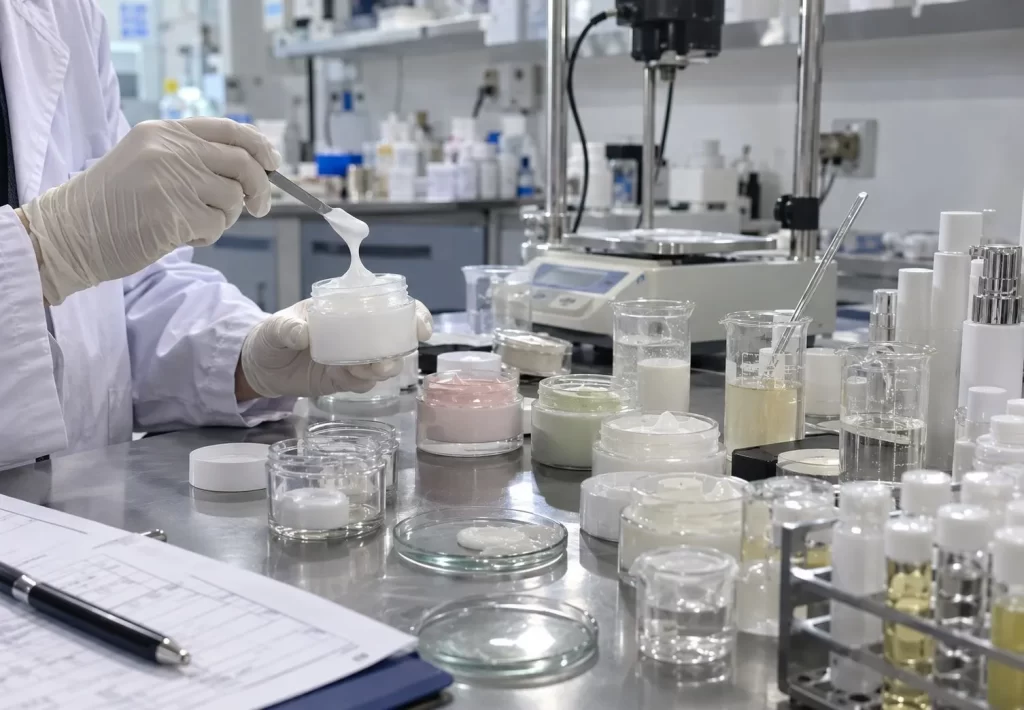
7. Stability & Compatibility
A cosmetic sample may look perfect, but that does not mean it is ready for mass production.
Why Testing Matters
Stability testing helps evaluate how a product behaves under different conditions over time. Depending on the product, checks can include appearance, color, odor, pH, viscosity, and microbial quality.
Compatibility testing looks at how the formula interacts with its packaging. This is especially important because certain formulas may react differently with particular containers or dispensing systems.
After the required testing is completed, the factory can prepare for commercial manufacturing.
8. Raw Material Preparation
Commercial production requires a carefully planned supply of ingredients and packaging materials.
Preparing for the Production Batch
The factory prepares the approved raw materials according to the production formula and planned batch size. Ingredients may include oils, water, active ingredients, emulsifiers, preservatives, fragrances, and colors.
Packaging components are also prepared and checked against the approved specifications.
This preparation creates a clear bridge between product development and factory production. Now, the approved formula is ready to be scaled up.
9. Bulk Emulsification
This is one of the most important stages in the cosmetic manufacturing process because the formula now moves from laboratory equipment to larger production equipment.
Scaling the Formula
Large batches require careful control of temperature, mixing speed, processing time, and ingredient order.
For creams and lotions, proper emulsification is especially important for achieving the desired texture and consistency.
Scaling up is not simply about making more product. Manufacturing conditions can affect how a formula behaves, which is why an experienced cosmetic factory China partner needs reliable production methods and trained staff.
Once the bulk product is ready, it can move to the filling line.
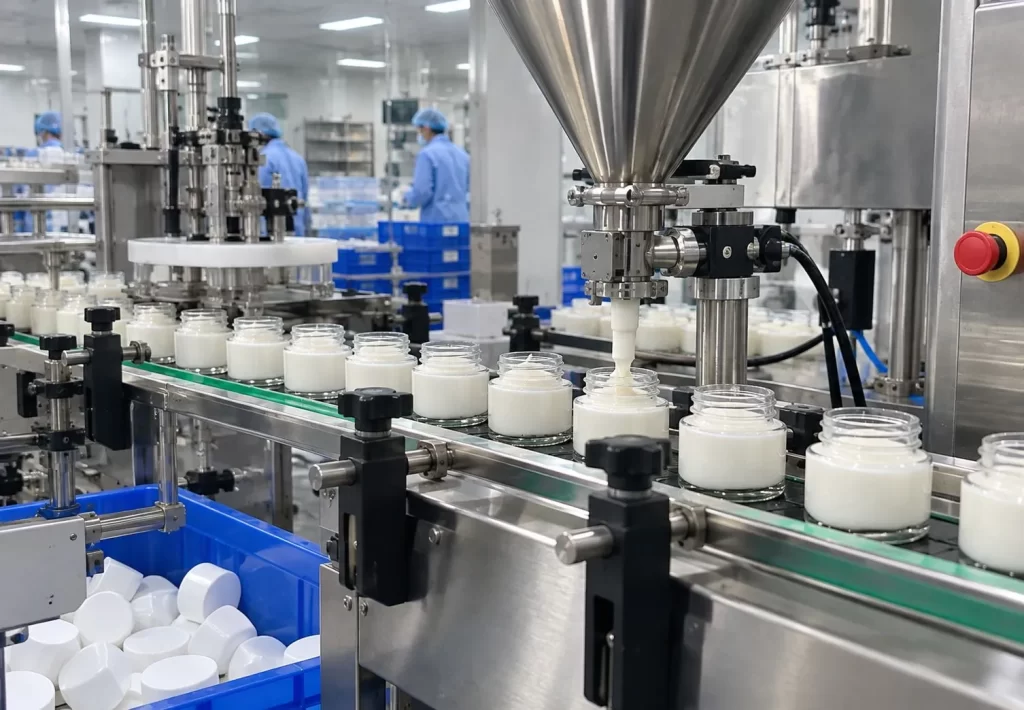
10. Filling & Packaging
The finished bulk product is transferred to the filling and packaging area.
From Bulk Product to Finished Unit
Containers are prepared and filled with the required quantity. They are then closed, labeled or decorated, coded, and packed into cartons.
Depending on the order, factories may use automated or semi-automated equipment to handle larger production volumes efficiently.
For brands planning skincare mass production, this stage is where an approved formula becomes a large number of finished retail units.
But before those products leave the factory, there is one more important checkpoint.
11. Quality Inspection
Quality control runs throughout a professional cosmetic manufacturing process, not only at the end.
Checking the Finished Products
Finished goods can be checked for appearance, color, odor, filling quantity, packaging condition, sealing, labeling, and other agreed quality requirements.
The purpose is simple: make sure the commercial batch matches the approved specifications and is ready for shipment.
Once quality checks are completed, the order can finally begin its journey to the customer.
12. Shipment
The final products are packed according to the agreed shipping plan.
Preparing the Order
The manufacturer and buyer confirm quantities, carton details, destination, shipping method, and required documents. Depending on the destination and urgency, products may be shipped by sea, air, or another suitable method.
| Stage | Brand Action | Factory Action | Key Output |
| Brief | Submit product idea | Analyze requirements | Product brief |
| Formula | Give sample feedback | Develop / adjust formula | Approved sample |
| Packaging | Choose style | Source / customize packaging | Packaging sample |
| Testing | Approve standards | Run required tests | Test results |
| Production | Confirm order | Manufacture bulk | Finished products |
| QC | Confirm standards | Inspect batch | QC approval |
| Shipping | Confirm logistics | Pack and ship | Finished order |
For international brands working with a cosmetic factory China supplier, good coordination at this stage helps keep the delivery process organized.
So, how long does everything take from the first sample to shipment?
13. How Long Does Cosmetic OEM Production Take?
There is no single timeline for every project. Several stages can affect the total lead time.
Sampling and Formula Development
Initial sampling and formula adjustments depend on product complexity and the number of feedback rounds.
Packaging and Testing
Standard packaging may be quicker to arrange, while custom packaging, printing, tooling, stability testing, and compatibility checks can require more time.
Production and Shipping
After approvals are complete, the factory must prepare raw materials, schedule production, manufacture the batch, complete QC, and arrange shipment.
For this reason, brands should discuss each stage with their OEM cosmetic manufacturer rather than relying on one general production estimate.
14. FAQ
Here are some common questions brands ask before starting the private label cosmetics process.
What is the MOQ for private label cosmetics?
MOQ depends on the product, formula, packaging, and level of customization. Standard products may have different requirements from fully customized products.
How long does sampling take?
Sampling time depends on the formula, product type, ingredient availability, and number of revisions. Custom products generally require more development work.
What happens after a sample is approved?
The project moves toward packaging and artwork approval, required testing, raw material preparation, production scheduling, manufacturing, QC, and shipment.
Can formula and packaging be developed together?
Yes. Developing both together can help ensure that the formula works well with the selected container and dispensing system.
What should I prepare before contacting a manufacturer?
Prepare your product idea, target market, preferred ingredients or benefits, packaging preference, expected quantity, and any specific requirements. The more information you provide, the easier it is for the manufacturer to understand your goals.
From an Approved Sample to a Market-Ready Product
Moving from a cosmetic sample to mass production is a step-by-step process. Formula development, packaging, testing, raw materials, manufacturing, filling, quality inspection, and shipping all need to work together.
For brands planning skincare mass production, choosing an experienced manufacturing partner can make this process easier to manage.
Ready to turn your product idea into a finished cosmetic product? Send us your product idea, target market, and packaging preference to request a custom formula and sample.
Foshan BonnieCo Biotechnology Co., Ltd. (BonnieCo Group) — Self-Owned Factory · Own Brands · Global Certifications · 15 Years of Smart Beauty Manufacturing. We operate three core business divisions:
1. Guangzhou LocRoyal Cosmetics Co., Ltd.: Hair care OEM + self-owned brands including PROINSCARE, PURC
2. Guangzhou BonnieCo Cosmetics Co., Ltd.: Skin care & color cosmetics OEM + self-owned brands including SenseInsCare, Jellyprim
3. A 50,000㎡ self-owned production base in Foshan