
Finding the right cosmetic OEM manufacturer is an important step for any beauty brand planning to launch new products or expand its business. From choosing a formula to approving packaging and managing mass production, every stage requires careful planning.
For overseas brands, working with a reliable Chinese manufacturer can make product development easier and more cost-effective. However, how do you choose the right factory, understand its pricing, and make sure your products meet your expectations?
In this guide, we’ll walk you through the complete cosmetics procurement process, from your first product idea to finished goods ready for shipment.
1. Define Your Product and Order Requirements Before Procurement
Before contacting a manufacturer, take some time to organize your product ideas. Clear requirements help us understand your expectations and provide more accurate suggestions and quotations.
Prepare Your Product Specifications
Start by identifying the products you want to develop. Are you planning to launch facial cleansers, serums, moisturizers, body lotions, or hair care products?
Next, consider these important details:
- Target market: Where will you sell your products? Different countries have different cosmetic regulations.
- Formulation direction: What ingredients, benefits, texture, and fragrance do you prefer?
- Product specifications: Define the product size, appearance, performance, and shelf-life expectations.
- Packaging: Choose your preferred bottles, jars, tubes, pumps, and materials.
- Order quantity: Estimate your first order and future purchasing needs.
- Launch schedule: Set your expected sampling, production, and delivery dates.
- Reference products: Share examples that show the results you want to achieve.
The more information you provide, the easier it becomes to develop a suitable product. Once your requirements are clear, the next step is finding a manufacturer capable of meeting them.
2. How to Evaluate OEM/ODM Manufacturers
Not every cosmetic ODM manufacturer offers the same level of service. Some focus mainly on trading, while others own production facilities and manage product development and manufacturing themselves.
So, what should you check before choosing a manufacturing partner?
Check Factory Facilities and Production Equipment
Start by understanding whether the manufacturer operates its own factory. Visit the facility if possible, or request a factory tour to see its actual production environment.
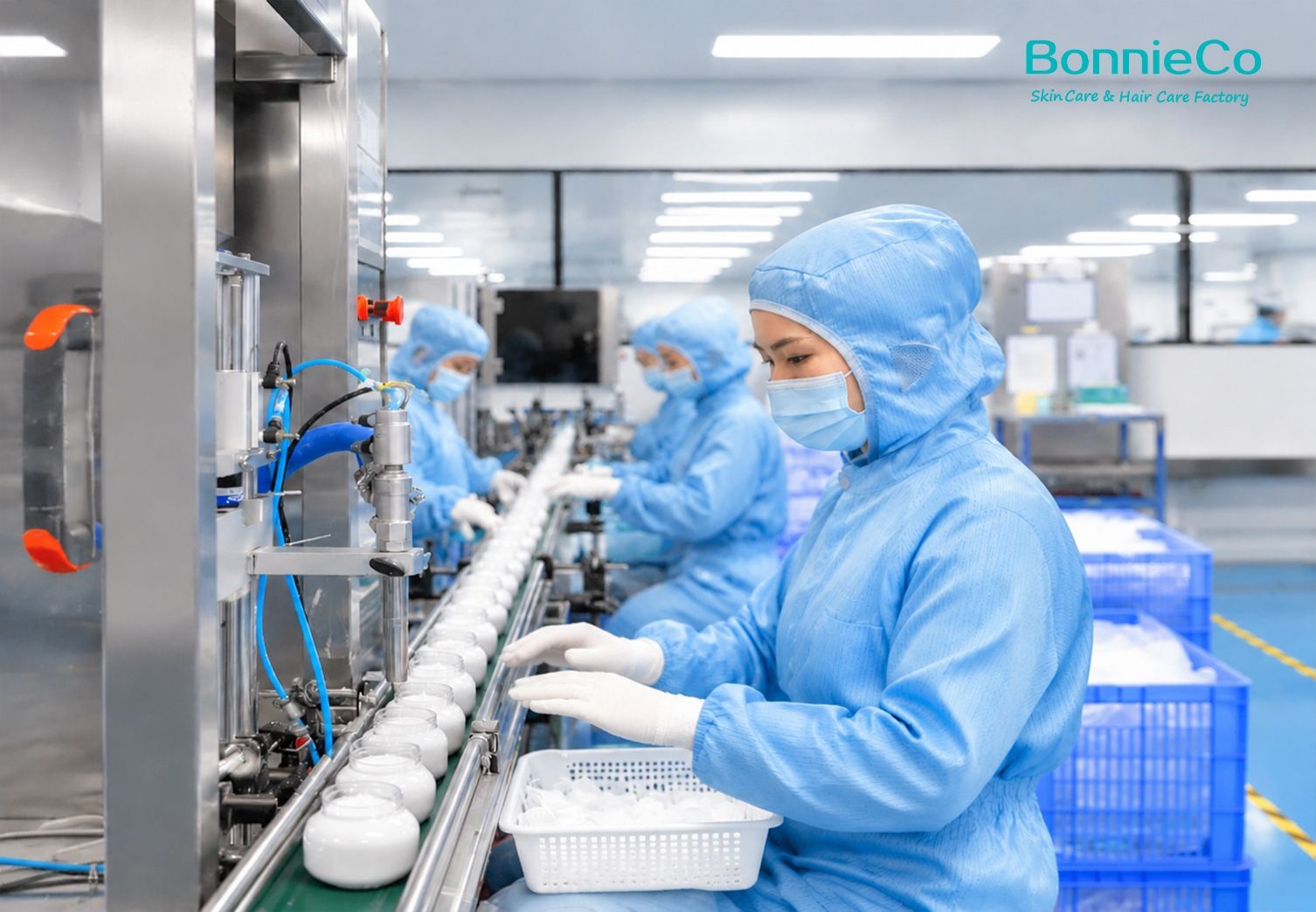
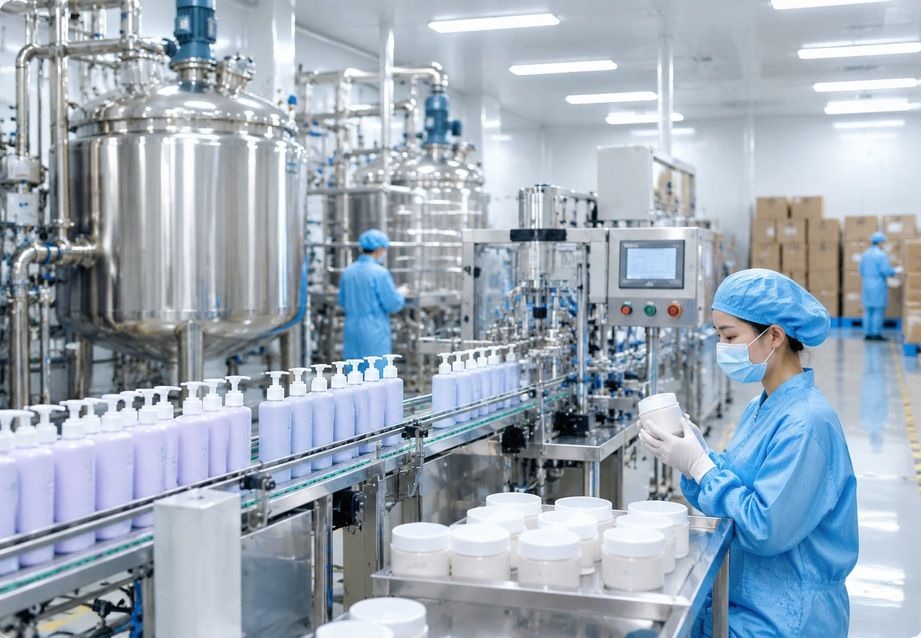
Check the mixing tanks, emulsification equipment, filling machines, and packaging lines. These facilities influence production efficiency and the factory’s ability to handle different order sizes.
Evaluate R&D and Quality Management
A strong R&D team can help develop new formulas, improve existing products, and adjust ingredients, textures, and fragrances.
You should also review the factory’s quality management procedures, testing arrangements, and relevant certifications. ISO 22716, for example, provides guidelines for Good Manufacturing Practices in cosmetics.
Finally, consider its export experience. A reliable cosmetic contract manufacturer should understand international shipping, product documentation, and destination-market requirements.
After confirming these capabilities, you can move forward with product development and sampling.
3. Formulation Sampling and Packaging Confirmation
Sampling turns your product idea into something you can actually test. It also gives you an opportunity to correct problems before placing a large production order.
From Formula Development to Sample Approval
The process usually starts with a discussion between your team and the manufacturer’s R&D team. You’ll share your preferred ingredients, product benefits, texture, fragrance, and target price.
Based on these details, the R&D team develops a formula and prepares samples for evaluation.
When testing the samples, pay attention to:
- Texture and spreadability.
- Absorption and skin feel.
- Fragrance and appearance.
- Product performance.
- Overall consistency with your expectations.
If something needs improvement, provide clear feedback so the manufacturer can make adjustments.
Confirm Packaging and Final Specifications
Formula approval is only one part of the process. You must also confirm packaging materials, container sizes, colors, printing, and labels.
Request packaging samples or prototypes before approving the final design. Check whether the packaging works properly with the formula and meets your market’s labeling requirements.
Once everything is approved, document the final formula, packaging details, and product specifications.
With these details confirmed, you’re ready to discuss the commercial side of manufacturing.
4. Understanding MOQs, Price Quotes, and Cost Components
When comparing manufacturers, price and Minimum Order Quantity (MOQ) are often major concerns. However, the lowest quotation does not always offer the best value.
What Determines Cosmetic Manufacturing MOQ?
MOQ depends on several factors, including:
- Formulation: Some ingredients require larger purchasing quantities.
- Packaging: Bottle, jar, and tube suppliers may have their own minimum order requirements.
- Production process: Equipment setup and batch sizes can affect order quantities.
- Customization: Special colors, printing, and packaging designs may increase minimum requirements.
- Total order volume: Larger orders may offer better production efficiency.
A private label cosmetics manufacturer can help you understand which factors affect your initial order quantity and suggest practical alternatives.
Understand What Your Quotation Includes
A manufacturing quotation may include raw materials, formulation development, packaging, filling, labeling, quality inspections, and other services.
When comparing quotations, make sure every manufacturer is pricing the same formula, product size, packaging materials, and order quantity.
Also clarify whether shipping, testing, and other additional expenses are included.
A clear quotation helps you avoid unexpected costs and make better purchasing decisions. Once the commercial details are settled, the project can move into mass production.
5. Mass Production and Quality Management
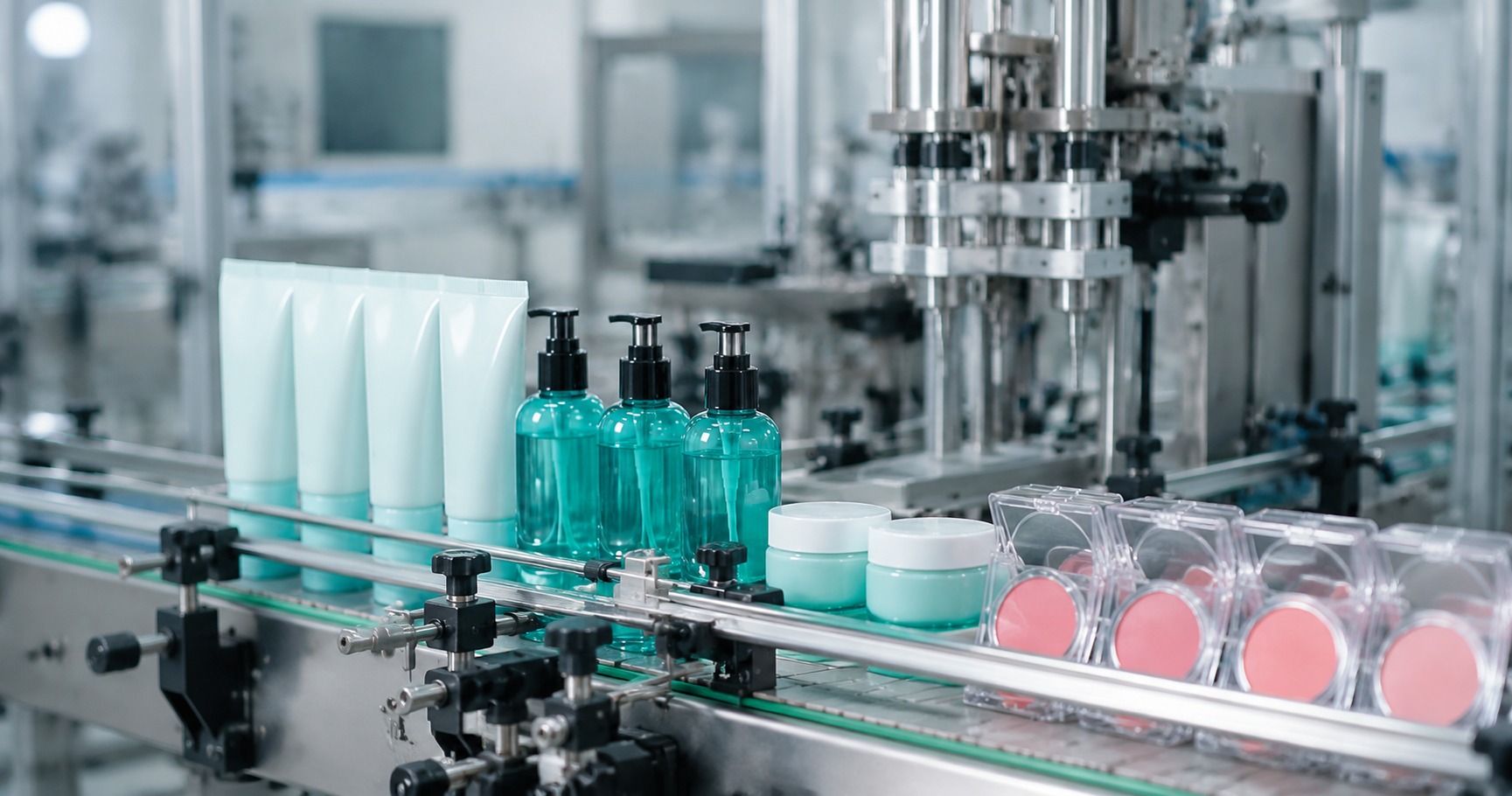
Mass production is where your approved product becomes a finished commercial item. A well-managed cosmetic manufacturing process requires coordination between raw material preparation, production, filling, packaging, and quality control.
Key Stages of Cosmetic Production
The process generally includes:
- Raw material preparation: Ingredients are received, checked, and prepared according to approved specifications.
- Emulsification and mixing: Ingredients are processed using suitable equipment and manufacturing procedures.
- Filling: Finished bulk products are transferred into approved containers.
- Packaging: Products are sealed, labeled, coded, and packed.
- Finished product inspection: Products undergo checks before release.
Maintaining Product Quality
Quality control should take place throughout production, not just at the end.
Depending on the product, inspections may cover appearance, odor, viscosity, pH, net content, packaging
integrity, and microbiological quality.
As a bulk cosmetic manufacturer, we believe clear production procedures and consistent inspections are essential for delivering reliable products.
Before shipment, buyers should also confirm that the finished goods meet the approved specifications.
But how long does the entire process take? That depends on several factors beyond manufacturing itself.
6. Lead Times and Export Preparation
Production schedules depend on sample approval, raw material availability, packaging procurement, factory capacity, and quality inspections.
Custom packaging can sometimes take longer to prepare than the formulation itself. Therefore, buyers should confirm packaging requirements as early as possible.
Prepare for International Shipping
Before production begins, check the regulations of your destination market.
For example, the European Union has specific requirements under Regulation (EC) No. 1223/2009. In the United States, cosmetic businesses must consider applicable FDA requirements, including obligations under MoCRA.
Label information, ingredient lists, product documentation, and other import requirements should be checked before shipment.
Your manufacturer should also coordinate export documents and logistics arrangements to support a smooth delivery process.
Good planning helps reduce delays and prepares your products for the next stage of business growth.
7. Why Partner with a Large-Scale Manufacturing Factory?
As your brand grows, your manufacturing needs may change. You may need larger orders, more product categories, faster production, or support for developing new formulas.
This is why choosing a factory with strong cosmetic production capacity matters.
Discover What We Offer at BonnieCo
At BonnieCo, we bring 15 years of cosmetics manufacturing experience to support brands at different stages of growth.
We operate a 50,000㎡ self-owned manufacturing facility equipped with 23 automated production lines and more than 30 units of imported machinery. Our daily emulsification capacity reaches 150 tons, allowing us to support large-volume manufacturing needs.
Our 15-member R&D team works on product development and formulation improvement, supported by a library of more than 20,000 formulations.
We have partnered with over 3,000 brands and served clients in more than 80 countries.
As a cosmetic OEM factory, we provide one-stop services covering product development, formulation, sampling, packaging, and mass production.
Whether you’re launching your first skincare collection or expanding an established beauty brand, our goal is to make the manufacturing process easier to manage.
Conclusion
Successful cosmetics procurement starts with clear product requirements and the right manufacturing partner. From evaluating factory capabilities and approving samples to understanding MOQs and managing mass production, every step plays a role in your final product quality and business success.
Choosing an experienced cosmetic OEM manufacturer can help you avoid common purchasing problems
and build a more reliable supply chain.
At BonnieCo, we’re ready to help turn your product ideas into finished cosmetics. Have a product concept or an upcoming manufacturing project? Contact our team today to discuss your requirements, explore suitable formulations, and find the right production solution for your brand.
Frequently Asked Questions
1. What is a cosmetic OEM manufacturer?
A cosmetic OEM manufacturer produces beauty products according to a brand’s requirements, including formulas, specifications, and packaging.
2. What affects cosmetic manufacturing MOQ?
MOQ depends on formulation ingredients, packaging supplier requirements, production processes, and order volume.
3. How long does cosmetic product development take?
Timing varies depending on formulation changes, sample approval, packaging availability, and testing requirements.
4. Can manufacturers develop custom skincare formulas?
Yes. A cosmetic ODM manufacturer can develop new formulations or modify existing ones based on a brand’s requirements.