
In today’s beauty industry, competition is intense, and trends change fast. Many brands want to launch products quickly, but they often struggle with one big question: how do you make sure a product will actually sell in real markets?
This is where precision OEM/ODM cosmetics manufacturing becomes important. It is not just about producing skincare or beauty products. It is about understanding real consumer needs and turning that knowledge into better product development.
At BonnieCo, this idea is taken one step further. The company does not only act as a cosmetics factory. It also runs multiple self-owned brands that operate in real global markets. These brands provide real data, real feedback, and real sales performance that directly improve OEM and ODM services for global clients.
So what makes this approach different from traditional manufacturing? And why are more international buyers paying attention to it?
Let’s take a closer look.
How Self-Owned Brands Transform a Cosmetics Factory
Most traditional cosmetics factory suppliers focus on production. They follow instructions, manufacture products, and deliver them. While this is important, it often misses one key part: real market understanding.
In precision OEM/ODM cosmetics manufacturing, success depends on more than just making products correctly. It depends on knowing what customers actually want in different regions and climates.
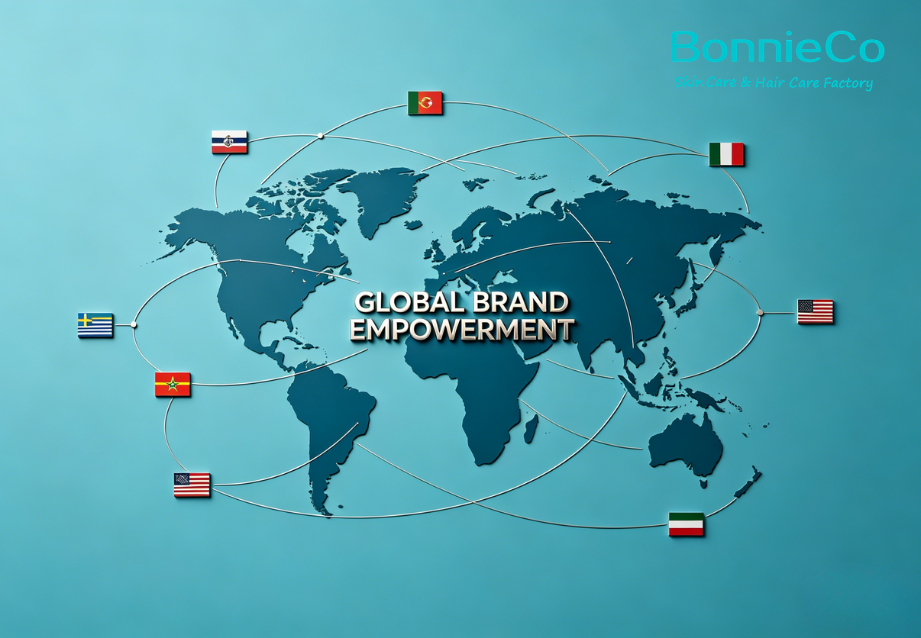
BonnieCo builds this understanding through its own brands, including ProInsCare, PURC, Jellyprim, SenseInsCare, Joyprettyin, and Auquest. These brands are sold in regions like Europe, the US, Southeast Asia, and the Middle East.
Instead of guessing trends, the company learns directly from real customers. This turns the manufacturing process into something more intelligent and market-driven.
Self-Owned Brands as Real Market Testing Systems
Each brand acts like a live testing platform. Products are not only designed in theory but also tested in real conditions.
For example, lightweight skincare may perform better in humid regions like Southeast Asia, while richer formulas may work better in colder markets. These results are not assumptions. They come from real sales and customer behavior.
This approach is what makes private label skin care manufacturers more competitive when they also run their own brands. They are not just producing—they are learning every day.
Jellyprim and Real Market Success
One strong example is Jellyprim, which sells over 3 million units annually in Southeast Asia.
This kind of performance is important because it shows real demand. It reflects:
- Strong product acceptance
- Good pricing strategy
- High repeat purchases
For a cosmetics factory, this is extremely valuable. It means the product is not just well-made it is well-received by real customers. This insight can then be used to improve cosmetics private label development for B2B clients.
So how does this real-world experience improve OEM and ODM services?

Precision OEM/ODM Cosmetics Manufacturing in Private Label Skin Care Manufacturers
When global brands work with private label skin care manufacturers, they expect more than just production. They expect consistency, quality, and speed. But today, there is another expectation: lower risk.
Many brands fail not because the product is bad, but because it does not match the market. This is where precision OEM/ODM cosmetics manufacturing adds real value.
Instead of starting from zero, BonnieCo uses data from its own brands to guide development decisions. This helps reduce mistakes and improve product success rates.
OEM vs ODM in the Cosmetics Factory Industry
To understand this better, we can simplify OEM and ODM:
- OEM means the client provides the idea, and the factory produces it.
- ODM means the factory helps design and develop the product.
In a traditional beautyfactory, ODM is based mostly on experience. But in a data-driven system, ODM is based on real market performance.
This is where BonnieCo stands out. It does not rely only on general trends. It uses actual sales results from its own brands to guide product creation.
How Market Data Improves ODM Development
When a product performs well under a self-owned brand, it gives clear signals about:
- What ingredients work
- What textures do customers prefer
- What packaging attracts attention
- What price range performs best
This makes development faster and more accurate. It also reduces the risk for b2b wholesale cosmetics clients who want to launch products with confidence.
Instead of testing many uncertain ideas, they can start with proven directions.
So how does this benefit global buyers even more?
OEM/ODM Cosmetics Manufacturing for Global B2B Wholesale Cosmetics Growth
Global buyers today face a crowded market. There are many suppliers offering cosmetics private label services, but not all of them can guarantee strong results after launch.
This is why many brands now prefer China’s private label skin care manufacturers’ OEM ODM solutions that are backed by real market experience.
But what makes this so important?
Reducing Risk Through Real Product Performance
One of the biggest challenges in beauty product development is uncertainty. A product may look good during testing but fail in real markets.
A cosmetics factory that runs its own brands understands this problem deeply. It has already seen what works and what does not in real customer environments.
This helps clients avoid:
- Poor ingredient choices
- Weak product positioning
- Misaligned packaging design
Instead of guessing, they can rely on proven results from real markets.
Scaling From Small Orders to Global Markets
Another important advantage is scalability. Many suppliers can handle small batches, but struggle when demand increases.
However, a manufacturer with global brand experience is already used to large-scale production and international demand.
BonnieCo’s presence in Europe, the US, Southeast Asia, and the Middle East shows that its systems are built for global growth.
This makes it easier for b2b wholesale cosmetics clients to scale from small launches to full international distribution without changing suppliers.
So what truly separates BonnieCo from a typical supplier?
Why BonnieCo Is More Than a Cosmetics Factory
At first, many suppliers may look similar. They all offer manufacturing, development, and private label services. But the difference becomes clear when you look at how they operate.
Most suppliers focus only on production. BonnieCo combines manufacturing with brand building. This creates a stronger foundation for precision OEM/ODM cosmetics manufacturing.
From Manufacturing to Brand Intelligence
Because BonnieCo operates multiple self-owned brands, it constantly collects real market feedback. This feedback is used to improve formulation, packaging, and product design.
This creates a cycle:
- Launch products
- Observe real performance
- Learn from customer response
- Improve future development
This cycle turns experience into long-term manufacturing intelligence.
What B2B Buyers Really Gain
For global clients, the real value is not just production. It is confidence in the product.
Working with BonnieCo means gaining:
- Faster product development cycles
- Lower market entry risk
- Better alignment with consumer trends
- Stronger global scalability
In simple terms, clients are not just buying manufacturing. They are buying real market experience.
And that is what makes a difference in today’s competitive beauty industry.
We have developed six self-owned brands, ProInsCare, PURC, Jellyprim, SenseInsCare, Joyprettyin, and Auquest, that have successfully entered key markets including Europe, the US, Southeast Asia, and the Middle East. Among them, our flagship brand Jellyprim sells over 3 million units annually in Southeast Asia. Through the real-world market performance of our own brands, BonnieCo gains deep insights into regional consumer preferences and market trends, transforming “market-validated product appeal” directly into smart OEM/ODM capabilities that help our clients avoid trial and error.
FAQ
1. What makes BonnieCo different from a traditional cosmetics factory?
BonnieCo is not just a typical cosmetics factory. In addition to manufacturing, we have developed six self-owned brands ProInsCare, PURC, Jellyprim, SenseInsCare, Joyprettyin, and Auquest. These brands have successfully entered key markets including Europe, the US, Southeast Asia, and the Middle East, giving us real experience beyond production alone.
2. How successful is BonnieCo’s flagship brand Jellyprim?
Our flagship brand Jellyprim is a strong example of real market success. It sells over 3 million units annually in Southeast Asia, showing strong consumer acceptance and consistent demand in that region.
3. How do BonnieCo’s self-owned brands improve OEM and ODM services?
Through the real-world market performance of our own brands, BonnieCo gains deep insights into regional consumer preferences and market trends. This allows us to transform “market-validated product appeal” directly into smarter OEM and ODM capabilities, helping clients reduce trial and error in product development.
4. Why is this important for private label skin care manufacturers and B2B clients?
Because our experience as both a manufacturer and brand owner helps us understand what works in real markets, we can better support private label skin care manufacturers and b2b wholesale cosmetics clients with more accurate and market-ready product solutions.