
What makes a beauty product stand out when consumers already have thousands of choices?
In 2026, the answer is not always a new ingredient. Increasingly, it is the experience a product creates. Consumers notice how a serum spreads, how quickly a cream absorbs, how refreshing a gel feels, and even how satisfying a texture looks in a video.
This is especially important for brands planning their private label cosmetics 2026 launches. A distinctive texture can give a familiar formula a fresh identity and help a product feel more memorable.
For brands, however, the goal should not be to chase every new texture. The better approach is to understand which textures have real market potential, then customize them around a specific customer and brand story.
So, which cosmetic textures are worth developing in 2026, and how can brands turn these trends into products people actually want to use?
1. Why Texture Matters More for Beauty Brands in 2026
Ingredients still play a major role in skincare, but they are no longer the only thing consumers notice. The overall product experience has become part of the buying decision.
A serum may contain popular ingredients, but if it feels sticky or heavy, consumers may quickly lose interest. On the other hand, a smooth, lightweight, or unusual texture can make a product more enjoyable from the first application.
For brands competing in private label cosmetics in 2026, this creates an opportunity to stand apart without trying to reinvent the entire skincare category.
Texture influences the user experience
Think about the difference between applying a watery serum and a rich cream. Both can be effective, but they create completely different experiences.
Texture affects how easily a product spreads, how it feels during application, and what the skin feels like afterward. These details can help a brand position a product as lightweight, luxurious, refreshing, gentle, or deeply nourishing.
Texture also creates marketing value
There is another reason texture matters: social media.
A jelly mask, stretchy cream, whipped scrub, or cooling gel can be shown clearly in a short video. These products give beauty creators something visually interesting to demonstrate, which can help generate attention online.
But if texture is becoming such an important part of product development, which textures should brands be watching in 2026?
2. 8 Trending Cosmetic Textures Worth Developing
The most useful trends are not simply the ones that look unusual. They should combine sensory appeal
with a clear product purpose.
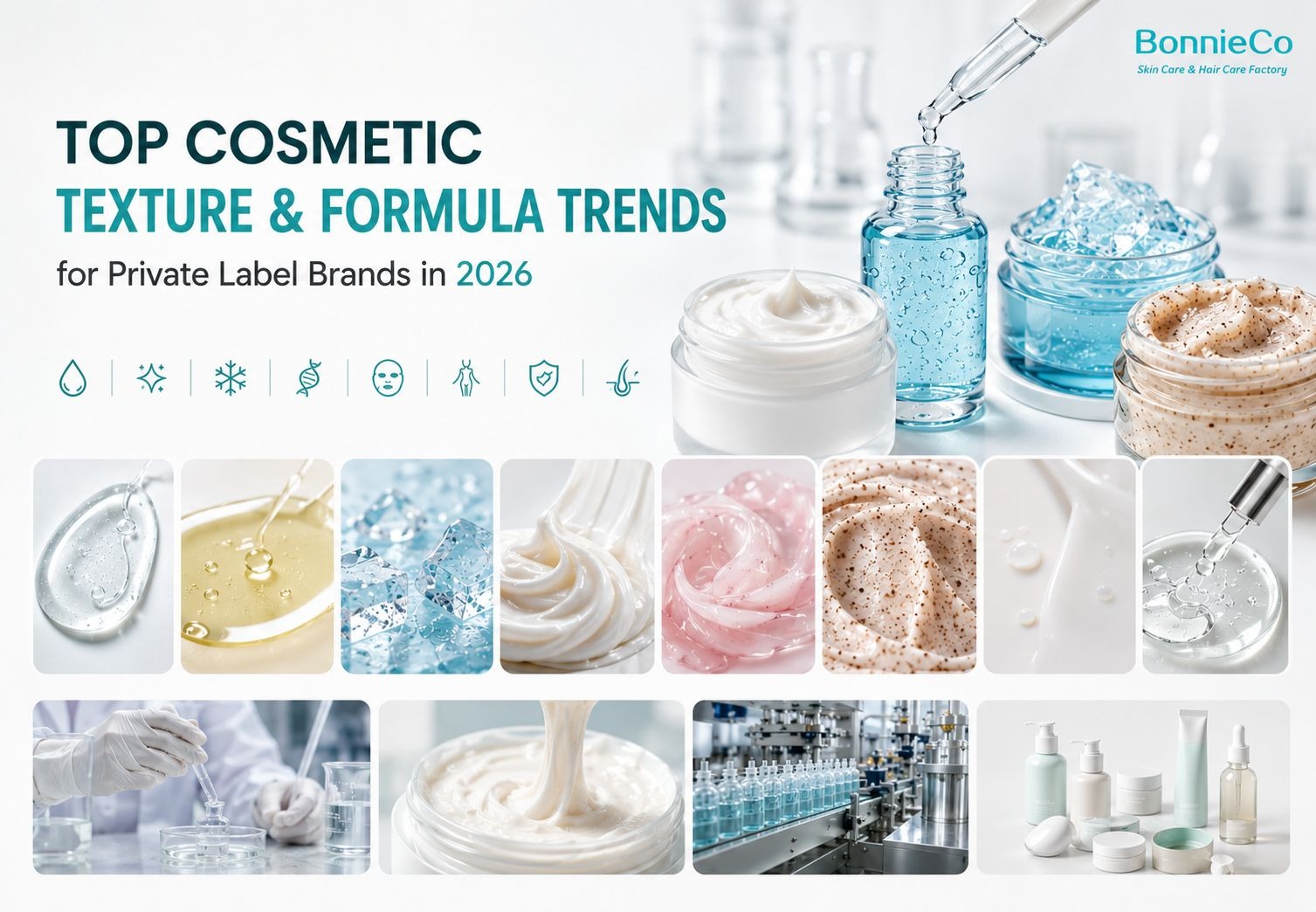
For 2026, PDRN, peptides, cooling beauty, body care, scalp care, and barrier care offer several promising directions for brands.
PDRN Elastic Serum
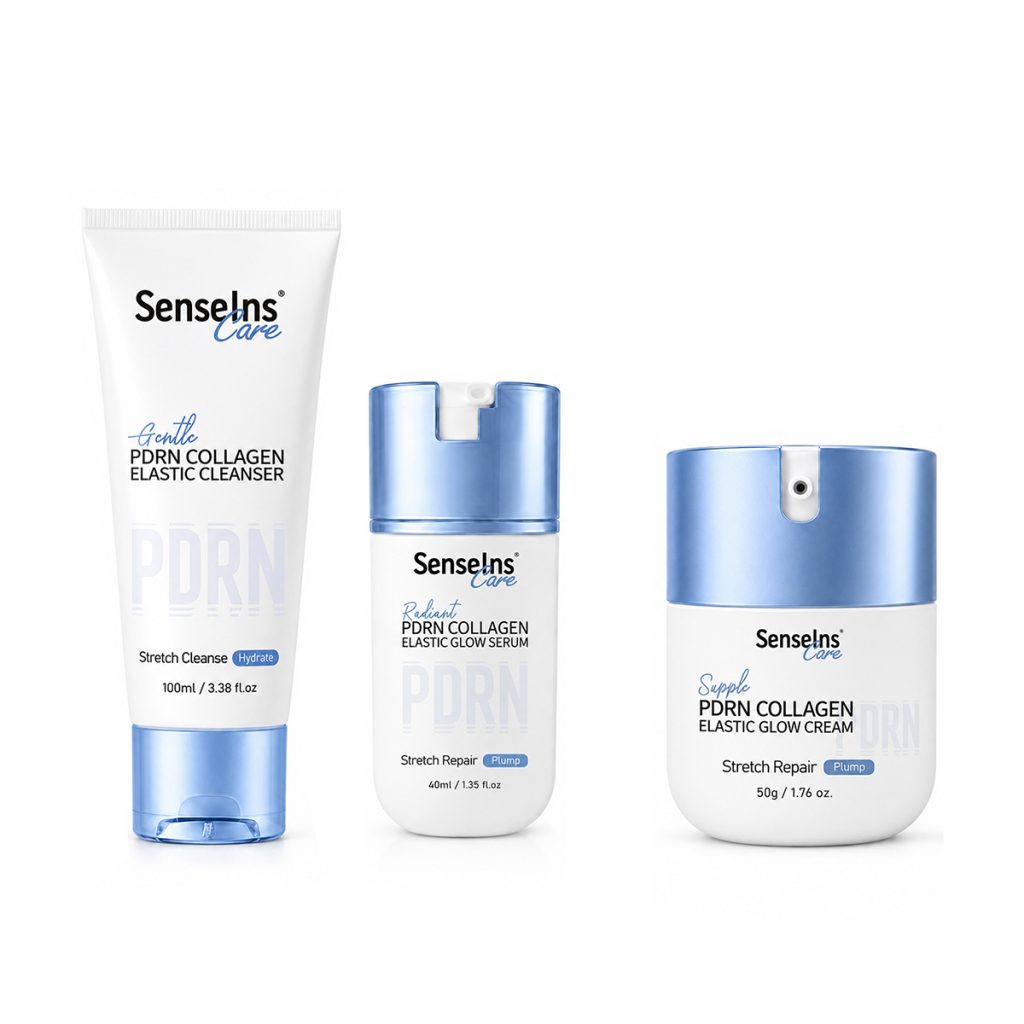
PDRN has gained attention in premium skincare, and an elastic or silky serum texture can give this type of product a more distinctive feel.
The challenge is creating a texture that feels interesting without becoming difficult to spread or absorb. A PDRN serum manufacturer can help brands adjust viscosity and skin feel while developing the formula around the desired product concept.
Dual Phase Water Oil Serum
Why choose between water and oil when a formula can bring both together?
Dual-phase serums usually contain a watery layer and an oil layer that blend when shaken. This creates a noticeable visual effect and gives consumers an extra step in the application experience.
The format also allows brands to explore different active ingredients and sensory profiles.
Cooling Ice Gel
Cooling beauty products can provide an immediate feeling of freshness. Ice gel textures can be developed for masks, moisturizers, eye products, and other skincare formats.
The level of cooling can also be adjusted, making the concept suitable for different product positions and markets.
Stretchy Peptide Cream
Peptide products are often associated with anti-aging skincare, but the texture can make them feel much more modern.
A stretchy peptide cream can create a soft, flexible feel while giving the product a memorable identity. A peptide skincare manufacturer can help brands explore the right balance of stretch, softness, absorption, and richness.
Jelly or Pudding Mask
Jelly and pudding masks have a soft, bouncy appearance that immediately makes them different from traditional masks.
Their unusual texture can also make them highly suitable for social media content, especially when the product’s appearance supports the overall brand concept.
Whipped Body Scrub
Body care is also becoming more focused on sensory experiences. A whipped scrub can feel lighter and more luxurious than a traditional dense scrub.
Brands can customize the scent, color, exfoliating particles, and texture to create a product that feels unique to their brand.
Milky Barrier Toner
Barrier care remains an important direction in skincare. A milky toner can combine a soft appearance with a lightweight and comforting application.
Ingredients such as ceramides can support the barrier-care concept, while the milky texture gives the product a gentle and modern identity.
Lightweight Scalp Serum
Scalp care is moving further into the beauty conversation. Lightweight scalp serums can provide a way for brands to expand beyond traditional hair products.
A watery texture can feel comfortable without leaving the scalp greasy, while cooling ingredients can create a fresh application experience.
With so many possibilities, though, choosing a trend is only the beginning. The next step is making that trend fit your brand.
2026 Trend Product Comparison
| Trend | Recommended Product | Texture | Customizable Options | Best For |
| PDRN | Serum / Cream | Elastic / Silky | Actives, viscosity | Premium skincare |
| Peptides | Serum / Cream | Lightweight | Peptide system | Anti-aging positioning |
| Cooling Beauty | Gel / Mask | Ice gel | Cooling level | SEA / Middle East |
| Body Care | Scrub / Serum | Whipped / Gel | Scent, particles | Body care brands |
| Scalp Care | Scalp Serum | Watery | Actives, cooling | Hair brands |
| Barrier Care | Toner / Cream | Milky | Ceramide system | Sensitive skin |
3. How Can Brands Customize These Textures?
A popular texture does not automatically create a successful product. If several brands launch the same-looking gel or cream, the trend quickly loses its power.
The real advantage comes from customization. With custom skincare formulation, brands can take a popular concept and shape it around their own customers.
Active ingredients
The active system should match the product’s purpose. PDRN and peptides may support premium skincare concepts, while ceramides can fit products focused on barrier care.
The ingredient story and texture should support each other instead of feeling like two separate ideas.
Viscosity and skin feel
Small changes in viscosity can completely change how a product feels.
A serum can be watery and fast-absorbing or slightly thicker and more silky. A cream can feel rich and cushion-like or light and breathable. These choices help brands create a more specific consumer experience.
Color, fragrance, and packaging
Color and fragrance can reinforce the personality of a product. Packaging matters too. A watery scalp serum may need a practical applicator, while a thicker cream may work better in a jar or tube.
When these details are planned together, the final product feels much more intentional.
But there is one more question brands need to ask before choosing a formula: Will this texture work for my target market?
4. How to Choose a Trend for Your Target Market
A trend that performs well in one region may not have the same appeal somewhere else. Climate, beauty habits, consumer expectations, and product preferences all influence the right choice.
USA and Europe
Brands targeting the USA and Europe may focus on strong ingredient stories, elegant textures, product performance, and clear product benefits.
Lightweight serums, peptide formulas, and barrier-focused products can be considered depending on the brand’s positioning and customer needs.
Middle East
Brands targeting the Middle East may explore premium sensory experiences, hydration-focused products, fragrance, and refreshing textures.
Cooling products can also be interesting for brands looking to create a fresh application experience.
Southeast Asia
Warm and humid conditions can make lightweight and refreshing products appealing. Watery serums, cooling gels, scalp products, and non-greasy textures can be useful directions.
The key is not to copy a global trend blindly. Instead, ask what your customers want and then find a texture that delivers it.
Once the right direction has been chosen, there is still one important challenge: turning the idea into a stable, production-ready product.
5. From Trend Idea to Finished Product
A successful product does not appear overnight. It moves through several stages, with each stage helping turn an idea into something consumers can actually use.
Trend Research
The process begins with research into consumer interests, competitor products, ingredient trends, and emerging textures.
Formula Brief
Next comes the formula brief. This defines the product type, target customer, key ingredients, texture, fragrance, appearance, and desired skin feel.
Sample and Texture Adjustment
Samples allow the brand to see whether the idea works in real life.
Maybe the serum needs to absorb faster. Perhaps the cream needs more stretch, or the cooling effect needs to be softer. These adjustments are an important part of product development.
Testing and Packaging
After the texture and formula are refined, appropriate testing can be carried out while packaging is developed around the product.
This is where working with an experienced skincare OEM manufacturer can be valuable. Formula, packaging, testing, and production all need to work together.
Mass Production
Once the formula and packaging are approved, the product can move into mass production.
A capable cosmetic manufacturer should do more than simply produce a formula. The right partner can help brands move from an early concept to a product that can be made consistently at scale.
Conclusion
For brands planning private label cosmetics 2026 launches, distinctive texture can become a powerful part of product differentiation.
PDRN elastic serums, dual-phase formulas, cooling gels, stretchy peptide creams, jelly masks, whipped body scrubs, milky toners, and lightweight scalp serums all offer interesting directions. Yet the strongest products will not simply copy what is trending.
They will combine the right texture with the right ingredients, skin feel, packaging, market, and brand story.
That is what turns a trend into a product with its own identity.
If you have a product idea and need help deciding on the right texture, formula, or packaging, BonnieCo can help you develop it from concept to production. Contact us to discuss your product idea, request a formula and sample, and start creating a distinctive beauty product for the 2026 market.
Foshan BonnieCo Biotechnology Co., Ltd. (BonnieCo Group) — Self-Owned Factory · Own Brands · Global Certifications · 15 Years of Smart Beauty Manufacturing. We operate three core business divisions:
1. Guangzhou LocRoyal Cosmetics Co., Ltd.: Hair care OEM + self-owned brands including PROINSCARE, PURC
2. Guangzhou BonnieCo Cosmetics Co., Ltd.: Skin care & color cosmetics OEM + self-owned brands including SenseInsCare, Jellyprim
3. A 50,000㎡ self-owned production base in Foshan
FAQs
What cosmetic textures are trending in 2026?
PDRN elastic serums, dual-phase serums, cooling gels, stretchy peptide creams, jelly masks, whipped scrubs, milky toners, and lightweight scalp serums are promising directions.
Why is texture important in skincare?
Texture improves the application experience, product appeal, and social media potential.
Can brands customize cosmetic textures?
Yes. Brands can customize ingredients, viscosity, color, fragrance, skin feel, texture, and packaging.
How can brands develop a custom texture?
An experienced cosmetic manufacturer can support formulation, sampling, testing, packaging, and production.