
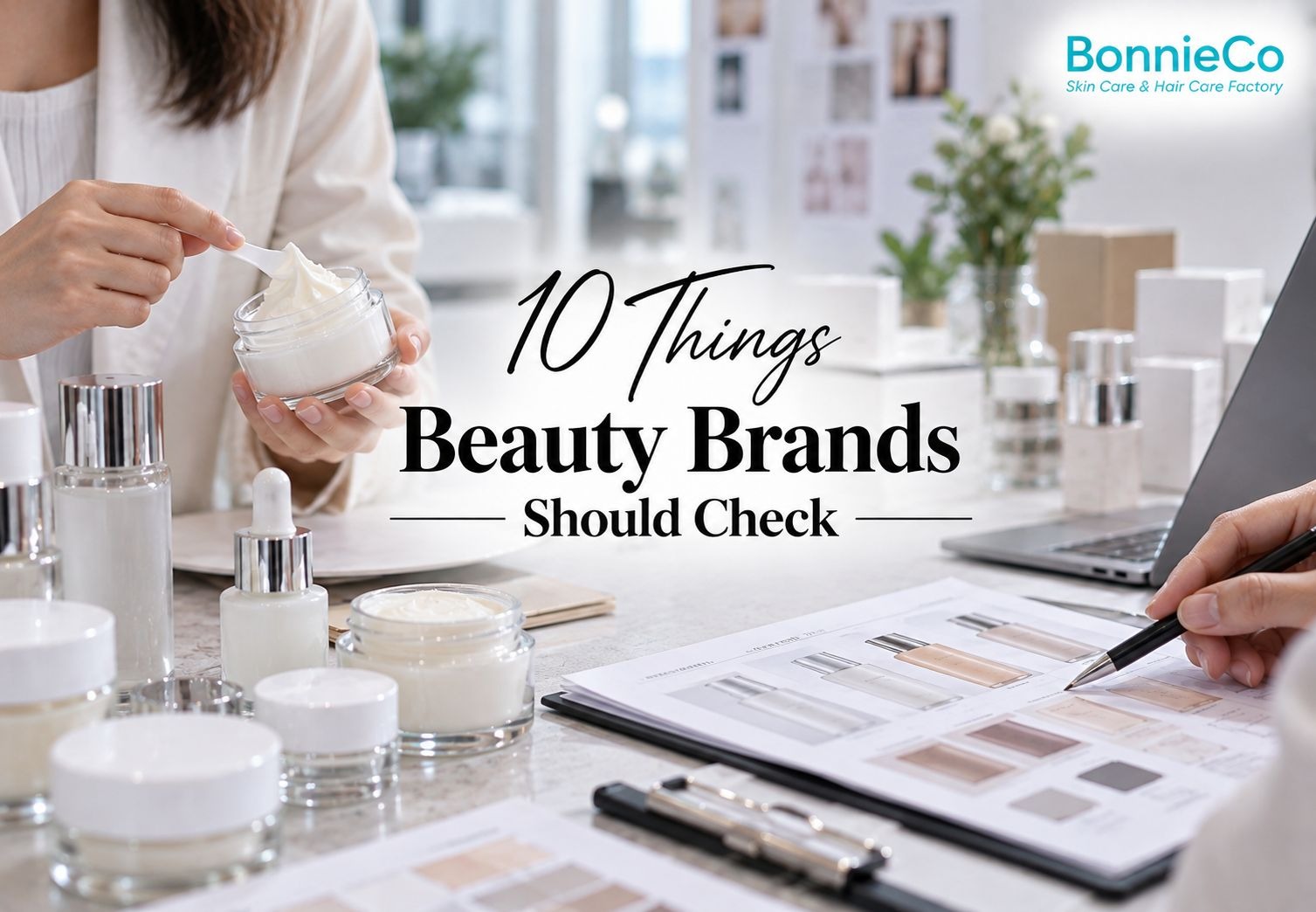
Choosing a cosmetic manufacturer is one of the most important decisions a beauty brand can make. The right partner can help turn a product idea into a market-ready product, while the wrong choice can lead to poor quality, missed deadlines, and unexpected costs.
For brands comparing cosmetic manufacturers, price should not be the only factor. R&D, formula development, production capacity, quality control, certifications, packaging, sampling, and delivery all affect the success of a product.
So, how can you tell whether a manufacturer is truly ready to support your brand? Here are 10 key areas to check before making a decision.
1. R&D Capability
A strong R&D team is the starting point for product development. Ask whether the manufacturer has in-house formulators, laboratories, and experience developing products similar to yours.
An experienced private label cosmetic manufacturer may offer ready-made formulas, but a capable R&D team should also be able to adjust formulas based on your product goals, ingredients, texture, fragrance, and target market.
Look for a clear development process from the first product brief to formula testing and final approval. This can show whether the manufacturer can support your project beyond simply filling an existing formula.
2. Formula Customization
Do you want a product that looks and feels different from every other product on the market? Then formula customization matters.
Ask an OEM cosmetic manufacturer how much control you have over ingredients, texture, color, fragrance, and product performance. Some manufacturers mainly provide stock formulas, while others can develop or modify formulas according to a brand’s requirements.
An ODM cosmetic manufacturer can also be useful when you want to start with an existing product concept and customize it for your brand.
The key is to understand exactly what can be changed and what cannot before development begins.
3. Production Capacity
A manufacturer may create excellent samples but still struggle when you place a large order. That is why production capacity should be checked early.
Ask about production capacity, manufacturing schedules, minimum order quantities, and how the factory handles larger orders. You should also ask whether production can increase as your sales grow.
A suitable cosmetic manufacturer should be able to explain its production process clearly and give realistic timelines rather than simply promising fast delivery.
4. Production Lines and Equipment
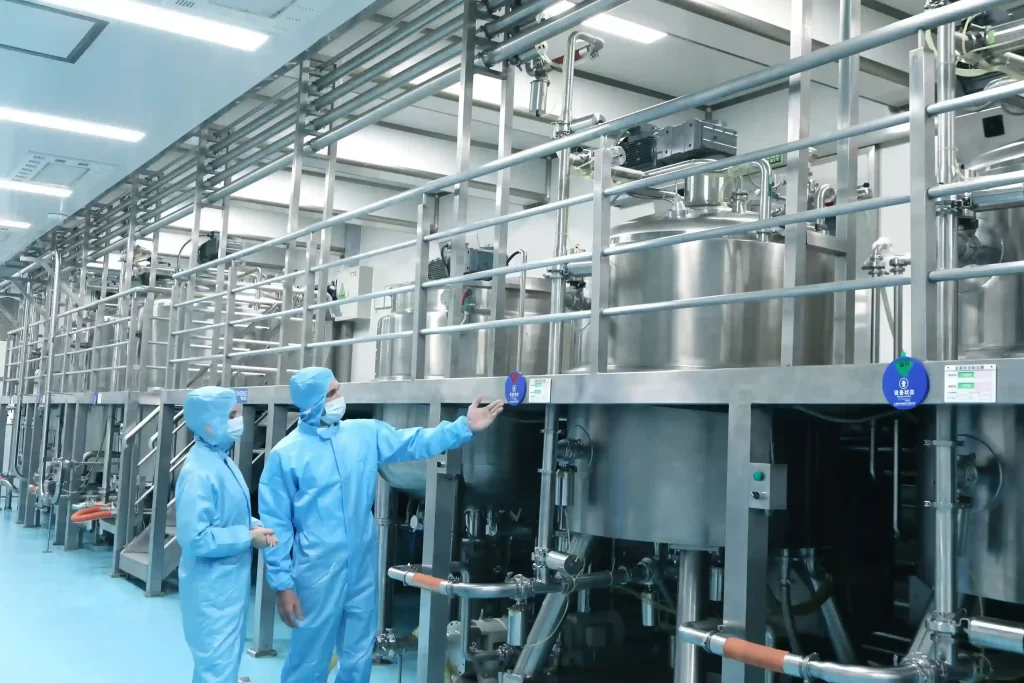
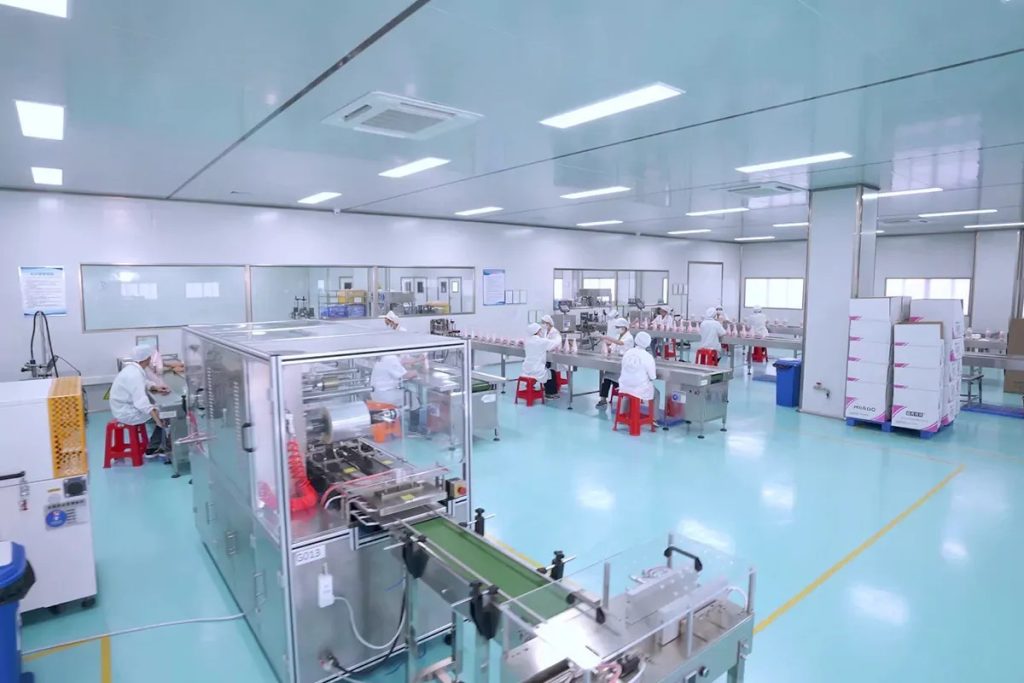
Capacity is closely connected to equipment. During a factory evaluation, look at the production areas and ask what equipment is used for mixing, emulsification, filling, sealing, labeling, and packaging.
Different cosmetic products may require different production processes. Creams, lotions, serums, cleansers, and other products can have different manufacturing requirements.
If possible, ask for a factory tour or detailed production information. Moving from the laboratory to production, packaging, quality control, and warehousing should follow a clear process.
5. Quality Control
What happens after the formula is approved? This is where quality control becomes critical.
A professional manufacturer should have defined quality checks throughout production. These may include checks on raw materials, product appearance, texture, filling quantity, packaging, and finished goods.
Ask how the manufacturer maintains consistency between batches. You should also ask what happens when a batch does not meet the required standard.
Do not focus only on the final inspection. Good quality control should be part of the entire manufacturing process.
6. Certifications and Compliance Support
Selling cosmetics in different countries can involve different regulatory requirements. A manufacturer should therefore be able to explain what documentation and compliance support it can provide for your target market.
When evaluating a skincare manufacturer China brands can work with, ask about applicable manufacturing standards and certifications, as well as testing and product documentation.
Do not simply ask, “Are you certified?” Ask which certification applies, when it was issued, and what scope it covers. You should also confirm whether the documentation matches the factory and products you are buying.
7. Packaging Customization
A good formula is only part of a successful beauty product. Packaging plays an important role in brand identity and customer experience.
Ask whether the manufacturer can support different packaging materials, colors, finishes, labels, boxes, bottles, jars, tubes, or other formats that suit your product.
A private label cosmetic manufacturer that offers both product and packaging customization can make the development process easier. However, always confirm which packaging options are available and whether special packaging affects MOQ or lead time.
8. Sampling Capability
Before committing to bulk production, you need to know what the finished product will actually look and feel like.
Ask about the sample process, including how many revisions are allowed, how samples are approved, and how the approved sample is used as a reference during mass production.
A clear sample approval process helps reduce misunderstandings. It also gives both the brand and manufacturer a shared reference for the final product.
But what happens if your first sample is not right? Ask how formula adjustments and additional samples are handled before you begin.
9. MOQ and Scalability
Minimum order quantity can have a major effect on a new brand’s budget. A very high MOQ may create unnecessary inventory pressure, while a manufacturer with no clear scaling plan may become difficult to work with as demand increases.
Ask for the MOQ for both the formula and packaging. These may be different.
You should also discuss what happens when your order volume grows. The right manufacturing relationship should be able to support your brand through different stages rather than only one production run.
10. Delivery and Export Experience
A product is not finished from a business perspective until it reaches the customer or distribution warehouse.
Ask for a realistic project timeline covering sampling, formula approval, packaging, production, quality inspection, and shipment. Also ask about export experience and communication during production.
Clear communication is especially important when working with an OEM cosmetic manufacturer overseas. A professional supplier should be able to provide updates and identify possible delays early.
What Should You Check Before Choosing a Manufacturer?
A simple comparison can help you identify potential problems early.
| What to Check | Good Sign | Red Flag |
| R&D | In-house lab / formulators | Only stock formulas |
| Formula | Multiple customization options | Almost no adjustment |
| Sample | Clear approval process | No approval standard |
| Factory | Capacity and equipment are transparent | Production info unclear |
| QC | Defined QC system | No batch standard |
| Packaging | Multiple customization options | Very limited options |
| Compliance | Market-document support | Documents unclear |
| Lead Time | Clear project timeline | Constantly changing |
| Communication | Professional RFQ handling | Only asks order quantity |
11. Questions to Ask Before Choosing a Manufacturer
Before signing an agreement, ask practical questions that reveal how the manufacturer operates.
- Can you customize my formula?
- What is your MOQ?
- How long does sampling take?
- What product and quality tests are available?
- Can you customize the packaging?
- What certifications and compliance documents can you provide?
- How do you control consistency between bulk batches?
- Can production scale with my brand?
The answers are often more useful than a sales presentation. A manufacturer that gives clear, specific answers makes it easier to plan your project.
12. Factory Visit Checklist
If you can visit the factory, follow the product journey from development to storage.
Laboratory → Emulsification → Filling → Packaging → QC → Warehouse
Look for organized work areas, clear production procedures, proper material handling, and a defined quality control process.
If an in-person visit is not possible, ask for detailed factory information, production videos, certifications, and documentation that can help you evaluate the manufacturing operation remotely.
13. FAQs
How do I find a reliable cosmetic manufacturer?
Compare manufacturers based on R&D, production capacity, quality control, certifications, sampling, packaging, MOQ, communication, and delivery. Do not choose based on price alone.
What should I ask an OEM cosmetic factory?
Ask about formula customization, MOQ, sampling, testing, production capacity, packaging, certifications, QC procedures, lead times, and export experience.
What certifications should a cosmetic manufacturer have?
The relevant certifications depend on the products, manufacturing facility, and target market. Ask the manufacturer for current documentation and confirm that the certification applies to the facility and manufacturing scope you need.
OEM vs ODM: which should I choose?
OEM is generally suitable when a brand has specific product requirements and wants manufacturing support based on those requirements. ODM can be useful when a brand wants to start from an existing product concept and customize it.
How do I verify a skincare manufacturer?
Review its manufacturing information, certifications, quality procedures, samples, communication, production capacity, and documentation. A factory visit or detailed remote audit can provide additional information before you place a bulk order.
Bottom Line
Choosing a cosmetic manufacturer requires more than comparing quotations. You need to understand how the manufacturer develops formulas, manages production, controls quality, supports compliance, handles packaging, and delivers finished products.
Whether you are looking for a private label cosmetic manufacturer, an OEM cosmetic manufacturer, an ODM cosmetic manufacturer, or a skincare manufacturer China brands can work with, take time to check each part of the process.
A manufacturer that can clearly explain its R&D, production, QC, compliance, sampling, and delivery processes gives you a stronger foundation for a long-term manufacturing relationship.
Are you ready to discuss your next product? Send us your product idea, target market, and packaging preference to request a custom formula and sample.
Foshan BonnieCo Biotechnology Co., Ltd. (BonnieCo Group) — Self-Owned Factory · Own Brands · Global Certifications · 15 Years of Smart Beauty Manufacturing. We operate three core business divisions:
1. Guangzhou LocRoyal Cosmetics Co., Ltd.: Hair care OEM + self-owned brands including PROINSCARE, PURC
2. Guangzhou BonnieCo Cosmetics Co., Ltd.: Skin care & color cosmetics OEM + self-owned brands including SenseInsCare, Jellyprim
3. A 50,000㎡ self-owned production base in Foshan