
Planning to launch a skincare or beauty brand? One of the first questions you will probably ask is, "How much will it cost to manufacture my products?"
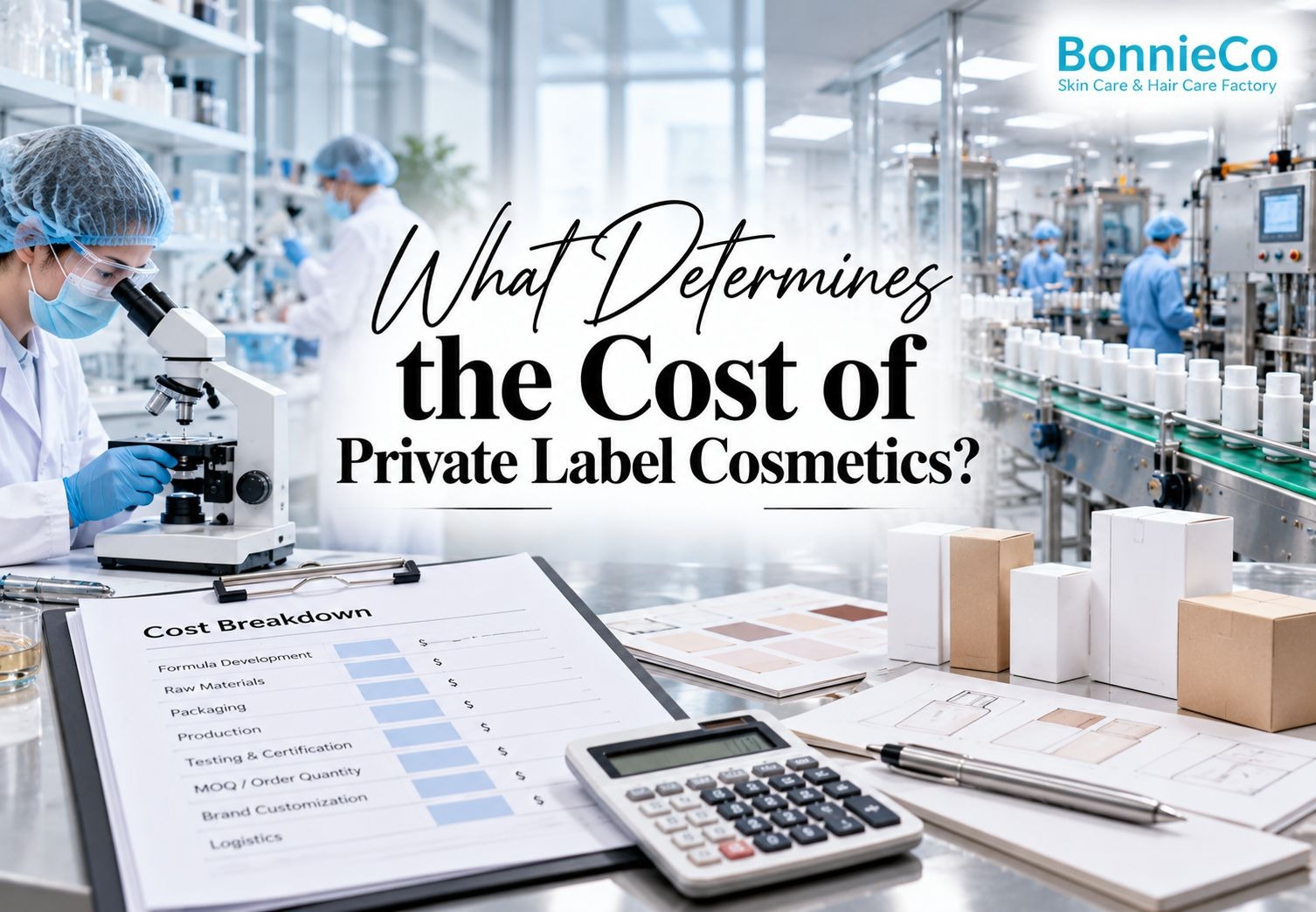
The answer depends on more than the product itself. The formula, ingredients, packaging, production process, testing requirements, and order quantity can all affect the final price. Even two similar skincare products may have different manufacturing costs.
For overseas beauty brands, importers, wholesalers, and purchasing managers, understanding these factors makes it easier to compare suppliers, plan budgets, and avoid unexpected expenses.
In this guide, we will explain what determines private label cosmetics cost, how you can control your procurement budget, and how BonnieCo can support your OEM/ODM manufacturing project.
Key Cost Components of Cosmetic OEM/ODM
Before comparing factory quotes, it helps to understand what you are paying for. Cosmetic manufacturing involves several stages, from selecting a formula to filling and packing the finished product. Each stage can affect the total cost.

Formula Research and Development
Every cosmetic product starts with a formula. Choosing an established formula may require less development work than creating a completely new one.
Custom formulation can involve ingredient selection, texture adjustments, fragrance preferences, and sample development. More specific requirements may require additional work before the product is ready for production.
For example, a basic moisturizing cream may have different development needs from a serum with a particular combination of active ingredients.
When discussing private label skincare pricing, consider whether an existing formula meets your needs before investing in extensive customization.
Raw Materials and Ingredients
Ingredients are another important part of skincare manufacturing cost. Their prices vary depending on the materials selected, their quality, and the amounts used in the formula.
A facial cleanser, moisturizing lotion, and specialized serum may have very different ingredient requirements. Sourcing conditions can also influence costs.
However, expensive ingredients do not automatically guarantee a better product. The formula should
match your product goals, target customers, and budget.
Discuss your essential ingredients with the manufacturer and ask whether suitable alternatives are available if certain materials push the cost beyond your target.
Packaging and Printing
Packaging includes bottles, jars, pumps, caps, labels, and outer boxes. Your choices can make a noticeable difference to the total project cost.
Standard packaging is often a practical starting point because existing designs may avoid the additional work involved in creating custom shapes or molds. Special printing methods, decorative finishes, and custom components can add further costs.
The right packaging also depends on the product. A thick cream may need a different container from a facial toner, while a serum may require a suitable dispensing system.
Choose packaging that protects the product, supports your brand image, and fits your budget.
Manufacturing and Quality Control
Production costs may include mixing, filling, assembly, labeling, and packing. The exact process depends on the product and the factory’s production setup.
Testing and quality control can also affect the overall cosmetic manufacturing cost. Requirements vary according to the formula, intended market, and project specifications.
When comparing quotes, ask what manufacturing services and quality checks are included. A low initial price may not tell the whole story if important requirements are excluded.
How Formulas, Packaging, and Order Quantities Affect Price
Once you understand the main cost components, the next step is to make decisions that fit your business goals. Your formula, packaging design, and order quantity can all influence the cost per unit and the investment required to launch your product.
Established Formulas vs. Custom Formulas
Using an established formula can help simplify product development. If an existing option matches your desired product type, texture, and ingredient preferences, you may avoid some of the work involved in creating a formula from scratch.
Custom formulas offer more control and may be necessary when your brand needs specific ingredients, a unique texture, or other distinct product features. However, additional development and sample adjustments may increase the initial investment.
The best choice depends on your product strategy. If you are launching your first skincare range, an established formula may be a sensible starting point. If product differentiation is central to your brand, customization may be worth considering.
Standard Packaging vs. Custom Designs
Standard bottles and jars can help keep a project simple while still allowing you to build a recognizable brand through labels, colors, and available decoration options.
Custom packaging provides more design freedom, but a unique bottle shape may require mold development. Special printing and surface finishes can also affect production costs.
Before choosing a design, ask yourself whether the extra packaging investment will offer real value to your customers. A clean, well-designed standard bottle may work just as well as a more expensive custom option for a new brand.
Small Orders vs. Large Orders
Order quantity affects both unit pricing and the amount of money you need to invest upfront.
Smaller orders may be useful when testing a new product or entering an unfamiliar market. However, setup costs and other production expenses may be spread across fewer units, resulting in a higher unit cost.
Larger orders may improve production efficiency or provide purchasing advantages for packaging materials. However, they also require more working capital and can leave you with excess inventory if sales are slower than expected.
There is no ideal quantity for every business. Discuss the available order options and minimum order quantity with your manufacturer, then compare the total investment against your realistic sales forecast.
How Brands Can Effectively Control Procurement Costs
Managing costs does not mean choosing the cheapest ingredients or sacrificing product quality. Often, better planning and clearer communication can help you avoid unnecessary expenses while protecting your product standards.
Start with Practical Product Requirements
Before requesting quotes, decide which product features are essential and which are flexible.
If an established formula meets your needs, consider using it instead of developing a new one. Explain your preferences for ingredients, texture, fragrance, and product performance so the factory can recommend suitable options.
Clear requirements also make it easier to compare private label cosmetics pricing between suppliers.
Choose Packaging That Fits Your Budget
Review standard packaging options before investing in custom designs. Ask your manufacturer about suitable bottle sizes, materials, closures, and printing choices.
If you are launching several products, consider whether compatible packaging components could simplify sourcing. Any savings will depend on the materials, quantities, and available options.
The aim is to create attractive, functional packaging without spending more than your business needs.
Plan Order Quantities Around Expected Sales
Ordering more products simply to pursue a lower unit price can create problems if demand does not meet expectations.
Estimate your sales based on your launch plans, distribution channels, marketing budget, and available cash. Then request quotes for suitable order quantities and compare both unit costs and total spending.
This approach helps you balance manufacturing efficiency with inventory risk.
Finally, compare supplier quotes on equal terms. Check that each quote covers the same formula, packaging specifications, quantities, and agreed services. This gives you a more accurate picture of the real cost.
How BonnieCo Helps Clients Optimize Costs
Choosing the right manufacturing partner can make product planning and procurement easier. A capable supplier can help you explore formula options, review packaging choices, and understand which requirements may affect your budget.
BonnieCo is a China-based cosmetic OEM/ODM manufacturer offering support for brands seeking product development and manufacturing services.
Access to Established Formulas
BonnieCo has a library of more than 20,000 established formulas. This gives clients a broad starting point when exploring potential products.
When a suitable existing formula meets your needs, it may reduce the amount of new development work required. Clients can discuss their product goals and determine whether an established option or a customized formula is more appropriate.
Automated Production Capabilities
BonnieCo operates 23 automated production lines. Automation can support efficient production processes, depending on the product and manufacturing requirements.
The actual cost of an order still depends on factors such as its formula, packaging, quantity, and processing needs. Discussing these details with the factory is the best way to understand the options for your project.
One-Stop OEM/ODM Services
Managing formulation, packaging, and manufacturing through different suppliers can make procurement more complicated.
BonnieCo’s one-stop OEM/ODM services allow clients to discuss their project requirements with a manufacturing partner. To make the quoting process more effective, prepare your product type, preferred ingredients, packaging ideas, target market, and estimated order quantity.
The more clearly you explain your needs, the easier it is to assess suitable options and identify the main cost factors.
Planning your next skincare or cosmetics project? Contact us at BonnieCo to discuss your requirements and explore suitable OEM/ODM manufacturing options.
Final Thoughts
Private label cosmetics cost depends on several connected factors, including formula development, raw materials, packaging, manufacturing, quality requirements, and order quantity.
For brands looking to manage procurement costs, the best approach is to plan carefully, choose practical packaging, evaluate established formulas, and match production quantities to expected demand.
Most importantly, do not compare manufacturers by price alone. Make sure you understand what each quote includes and whether the supplier can meet your product requirements.
With clear planning and the right manufacturing partner, you can make better purchasing decisions and build a cosmetics range that fits your brand goals and budget.
Planning a new private label cosmetics line? Contact us at BonnieCo to discuss your private label cosmetics project.
FAQs
1. What determines private label cosmetics cost?
Formula development, raw materials, packaging, manufacturing, testing requirements, and order quantity all affect the final cost.
2. How can brands reduce cosmetic manufacturing cost?
Choose established formulas, standard packaging, and order quantities based on realistic sales forecasts.
3. Why do manufacturer quotes vary?
Suppliers may differ in materials, production processes, packaging options, and included services.
4. Does order quantity affect unit pricing?
Yes. Larger orders may reduce unit costs, but require greater upfront investment.
5. How can BonnieCo help control costs?
BonnieCo offers established formulas, automated production lines, and one-stop OEM/ODM services.